Welcome to the website of Junkun New Material Technology Co., Ltd


What properties do tarpaulins need?
Sep 05,2024
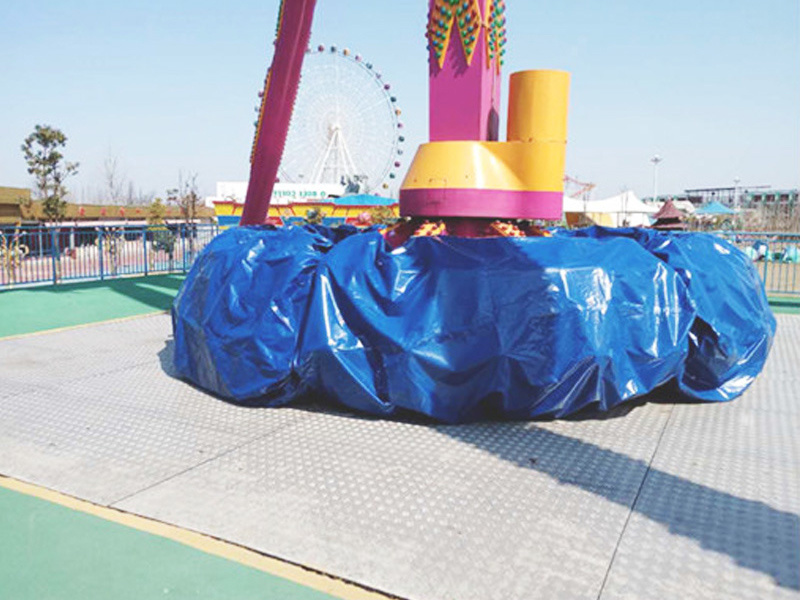
(1) Basic performance requirements for tarpaulin
Considering the various uses of tarpaulins, the general requirements that should be met are:
(1) Lightweight, easy to fold, and convenient to handle;
(2) High strength, wear-resistant, and long service life;
(3) Good waterproof and breathable performance, with anti condensation on the inner side;
(4) Acid and alkali resistant, mold resistant, and corrosion-resistant;
(5) Good weather resistance, flame retardant and fire-resistant;
(6) No core suction effect, no moisture conduction phenomenon will occur.
Tarpaulins generally require "three proof" functions. That is, waterproof, fireproof (flame retardant), and mildew proof.
(2) Main performance indicators
When designing or using products, the following performance indicators of tarpaulins should be considered.
1. Breathability: Tarpaulins must consider their breathability, especially military tent fabrics. The influencing factors of breathability include fabric structure, density, material, type of waterproof finishing agent, resin adhesion amount, etc. As the resin adhesion increases, the breathability of the tarpaulin decreases. Of course, this is related to the finishing agent used. Generally, tents with breathability are mostly made of short woven fabrics such as cotton, vinylon, and lacquered polyester that have been treated with paraffin or acrylic resin.
2. Tensile strength: The tarpaulin must withstand various tensions during use, such as tension when tightened during fixation, and additional forces such as wind, rain, and energy during use. Despite these external forces, they are still required to maintain their original shape and not easily deform, which requires the tarpaulin to have high tensile strength and should not have too much difference in tensile strength in the warp and weft directions. Especially for large tents used as inflatable buildings, the tensile strength is extremely important. Generally, the base fabric is made of high-strength polyester, vinylon and other fiber fabrics, which are waterproofed with vinyl chloride resin and chlorosulfonyl polyethylene resin. The strength of the product is mainly determined by the strength of the fiber material and the density of the fabric.
3. Elongation and dimensional stability: As eaves tents and large tents, they are often used under tension, and fabric elongation should not be too large. Its dimensional stability is determined by the creep characteristics of the material.
4. Tear strength: Tarpaulin damage is mainly caused by tearing, so tear strength is an important indicator of tarpaulin. The tear strength is related to whether the tarpaulin will break due to the effect of flying foreign objects or expand outwards after forming holes due to certain reasons, forming large structural cracks. So, when the tension is high, both high tensile strength and high tear strength are required for the canopy fabric.
5. Water resistance: Water resistance is an important characteristic of tarpaulins. Through immersion finishing, vinyl chloride resin is filled into the gaps of the fabric tissue to form a coating film. If the resin adhesion per unit area exceeds a certain level, water resistance is not a problem. If the coating is thin and subjected to bending, soft rubbing, or surface wear, the coating is prone to cracking, which may cause mud and water.
6. Flame retardancy: Starting from the safety of use, it is required that the tarpaulin has good flame retardancy. Flame retardancy can be achieved by selecting flame-retardant fibers and flame-retardant base fabrics. It can also be achieved by adding flame-retardant materials to the coating agent. The amount of flame retardant added is directly related to the flame retardant effect.
In addition to the above performance requirements, tarpaulins also require superior cold resistance, heat resistance, canopy fabric, creep resistance, repeated fatigue resistance, wear resistance, and bending and bending resistance.


